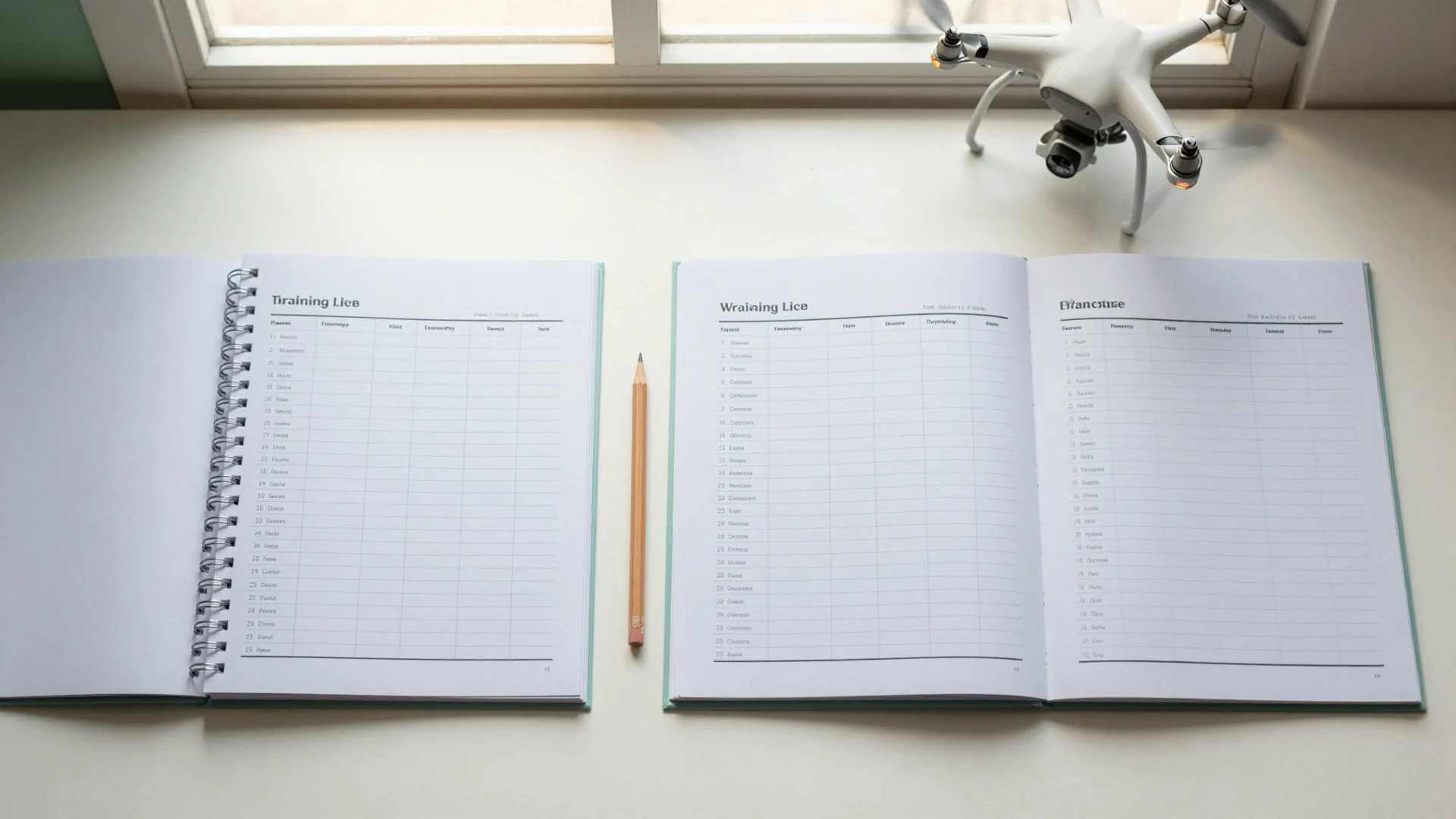
A good comparison makes uncertainty visible.
Define a fair comparison
A comparison works only when you know what decision it should support. Decide whether you are comparing beginner confidence-building, licence preparation, specialist mapping skills or video practice. Comparing a two-hour introduction against a multi-day assessment course without noting the difference creates a misleading result.
Keep a shortlist to two or three programmes so each difference remains readable, particularly on a phone.
Use consistent evidence fields
For every course, collect: intended learner, prerequisites, location, teaching language, theory hours, scheduled practical hours, estimated individual controller time, published price and tax treatment, equipment, assessment, cancellation terms and stated outcome.
Place a source link and last-checked date beside material claims. Do not silently convert an unknown value into 'none' or 'not offered.' 'Not verified' describes the evidence, not necessarily the course quality.
Treat credentials precisely
A training provider may hold a relevant approval or offer a course aligned with a regulator’s requirements. That does not imply that the learner automatically receives an operational permit or pilot licence. Check the actual regulator guidance and exact name of any competency certificate.
If approval status is time-sensitive, record what was checked, on which regulator page, and whether it applies to that course. Avoid carrying forward an old verification label indefinitely.
Make a decision you can defend
Use a small decision table. For each candidate mark 'meets my goal,' 'needs clarification,' or 'not suitable for my current situation.' The best choice should follow from the reader’s priorities rather than an unexplained platform score.
Before paying, request final written terms and confirm the booking channel. Keep a copy of the description on which your decision was based, because published course information can change.
Quick recap
- Define a fair comparison
- Use consistent evidence fields
- Treat credentials precisely
- Make a decision you can defend
Frequently asked questions
Do these guides authorise me to fly?
No. They are educational articles, not a licence, permit or location-specific clearance. Check the applicable regulator and permissions.
Can I rely on an academy’s promotional claims?
Treat prices, approvals and course outcomes as claims to verify against current provider terms and primary sources.
What should I do when details have changed?
Follow the latest official guidance and request a dated correction with a source link.
Authoritative sources and next reading
Sources and further reading
- CAAM ↗
Consult the provider or regulator for current details.
- CAAS ↗
Consult the provider or regulator for current details.
Check the original document for its scope, date and current status.
Something needs a closer look?
Suggest a correction