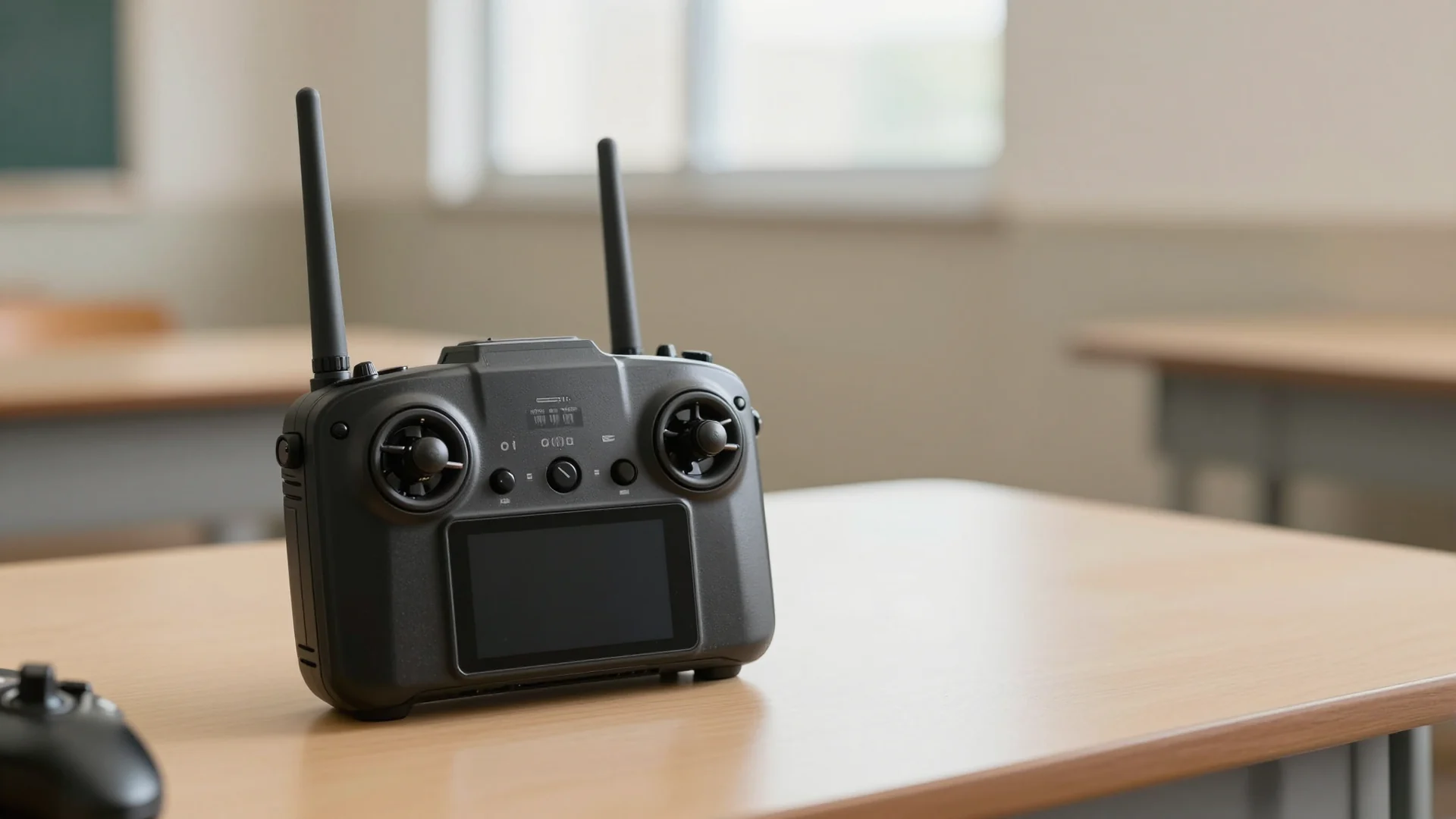
A safe flight is one you can explain before it starts.
Think in layers of risk
Safety is more than avoiding a crash. Consider the people on the ground, other airspace users, property, your battery and the information your camera might capture. A location can be legally restricted even when there is no one nearby; a flight can also be unwise even when a permit is available.
Start by listing what could go wrong on the specific route. A cable across the route, a sudden gathering of people or a weak satellite signal call for different precautions. Avoid a generic checklist that treats every site as identical.
Protect people and airspace
Give people and vehicles a wide margin appropriate to local rules and the operation. Never rely on bystanders to move aside at the last moment. Keep the aircraft under the level of visual observation and control required for the activity, and understand where manned aircraft may be operating.
If an aircraft or other unexpected hazard approaches, stop the planned manoeuvre and follow your training and applicable priority rules. Do not try to capture 'one last shot.'
Avoid automation overconfidence
Obstacle detection, return-to-home and GPS-assisted flight are helpful tools with limits. Sensors may not detect transparent, narrow or low-contrast hazards. Automated routes can be inappropriate after a change in weather or traffic.
Before activating a feature, ask what it will do if the connection is lost, the battery is low or the position estimate is poor. If you cannot answer from the manual, use a simpler exercise.
Make incidents teachable
If anything feels abnormal, land when safe and investigate before restarting. Document the circumstance without guessing about the cause. A clear report says what happened, what the screen showed and what you did next.
A responsible learning environment makes postponing a flight acceptable. Choose a course that explains emergency decisions as carefully as it explains camera movement.
Quick recap
- Think in layers of risk
- Protect people and airspace
- Avoid automation overconfidence
- Make incidents teachable
Frequently asked questions
Do these guides authorise me to fly?
No. They are educational articles, not a licence, permit or location-specific clearance. Check the applicable regulator and permissions.
Can I rely on an academy’s promotional claims?
Treat prices, approvals and course outcomes as claims to verify against current provider terms and primary sources.
What should I do when details have changed?
Follow the latest official guidance and request a dated correction with a source link.
Authoritative sources and next reading
- CAAM UAS official guidance
- CAAS flight requirements
- Manufacturer model-specific flight manual: to be added only once the model has been chosen and source verified.
Sources and further reading
- CAAM ↗
Consult the provider or regulator for current details.
- CAAS ↗
Consult the provider or regulator for current details.
Check the original document for its scope, date and current status.
Something needs a closer look?
Suggest a correction